
The Journey Towards Having More FUN Surfing
Surfing means different things to different people, but should always remain at its core
Fun
Lack of progression and fatigue leads to frustration which then leads to an unpleasant lineup. Nobody wants that. The first step in thwarting this downward spiral is to improve your entire surfing experience, from the pre-surf ritual, paddling out, deciding on a spot to surf, making adjustments, choosing the wave for you, riding with flow, kicking out, sharing with others, and finally exiting the water to talk story with others afterwards. At its root, to have more fun means to improve. It doesn't matter where you start in this journey of progression, from novice to pro, you can always improve and enjoy the experience of surfing just a little ... bit ... more.
What To Do If You Feel You Are Losing the Wave

Our brains are super interesting.
When surfers begin to lose a wave they’re paddling for, something automatic tends to happen.
And that something isn't good - in fact, it's terrible because it wastes energy, hurts the rotator cuffs, and draws the surfer farther up the wave face.
But rather than talk about what not to do, let’s talk about what to do when you feel like you’re losing the wave you’re paddling for.
In this video, we explore what Kai Hing does when he finds himself in a predicament: he’s not really in the right position to catch the wave, but he realizes it too late (this happens to all of us).
Instead of giving up, he recognizes what’s happening and adjusts his paddling to keep the wave underneath him - and ultimately catches it.
Watch and enjoy.
Contact me anytime to learn more about the Surfing Paddling Technique courses - or check out the book and get three free videos to go along with it: https://www.surfingpaddling.com/surfing-paddling-technique-book
How to Make a Sh&#ty Surf Day Suck Less CHALLENGE
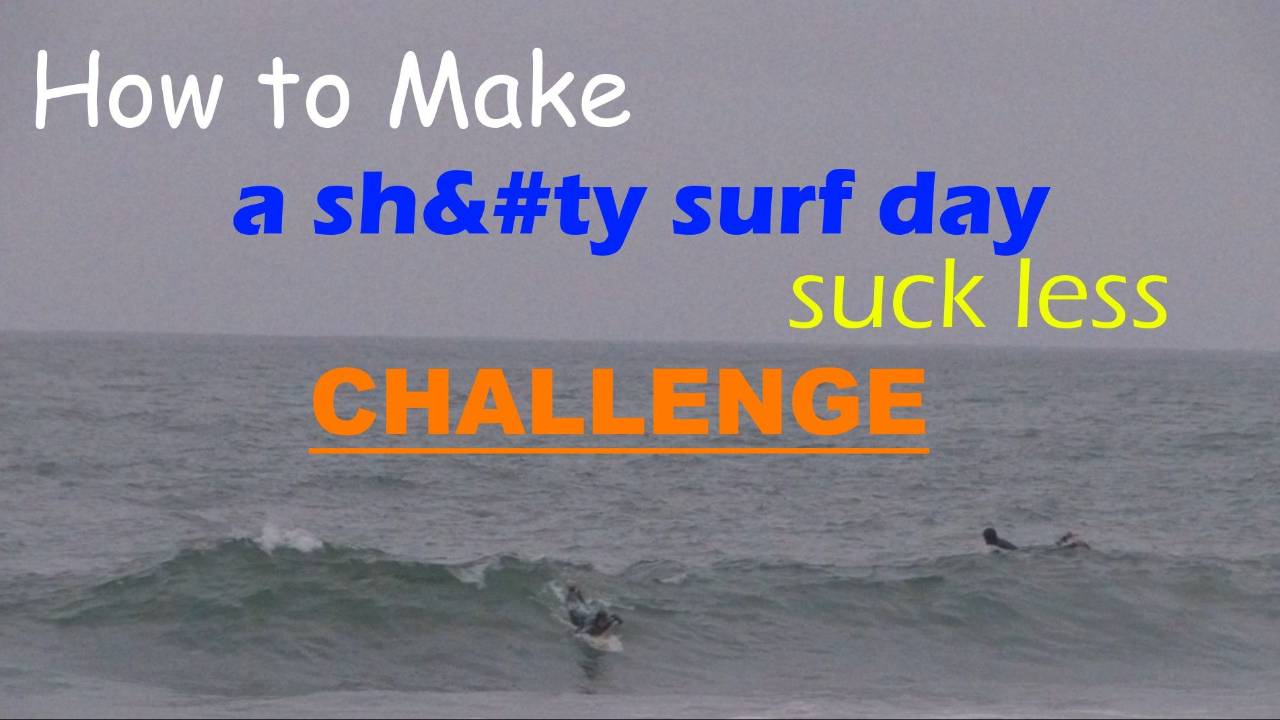
The waves weren't good.
Not terrible in the sense that you couldn't surf them. Just…not motivating.
Small. Inconsistent. Nothing particularly exciting on the horizon.
The kind of conditions where you paddle out, catch a couple of waves, and start wondering if you should have just stayed home.
I've had plenty of those days.
Over the years, I've developed a little challenge I go back to whenever the waves aren't very good.
Instead of judging the session by the quality of the waves, I give myself a different objective:
How many waves can I catch in 90 minutes?
Not how many good waves.
Just waves.
The challenge is simple:
30 minutes on a longer board.
30 minutes on a shorter board.
30 minutes bodysurfing.
I do my normal warm up at the car, jog to the water’s edge and between each round, I come back in, jog back to my car, switch equipment, and lightly jog back to the water.
No sitting around.
No checking the phone.
No waiting for the conditions to improve.
Just keep moving....
How Did Yago Dora Overtake Griffin Colapinto in the Paddle Battle from the Lexus WSL Finals?
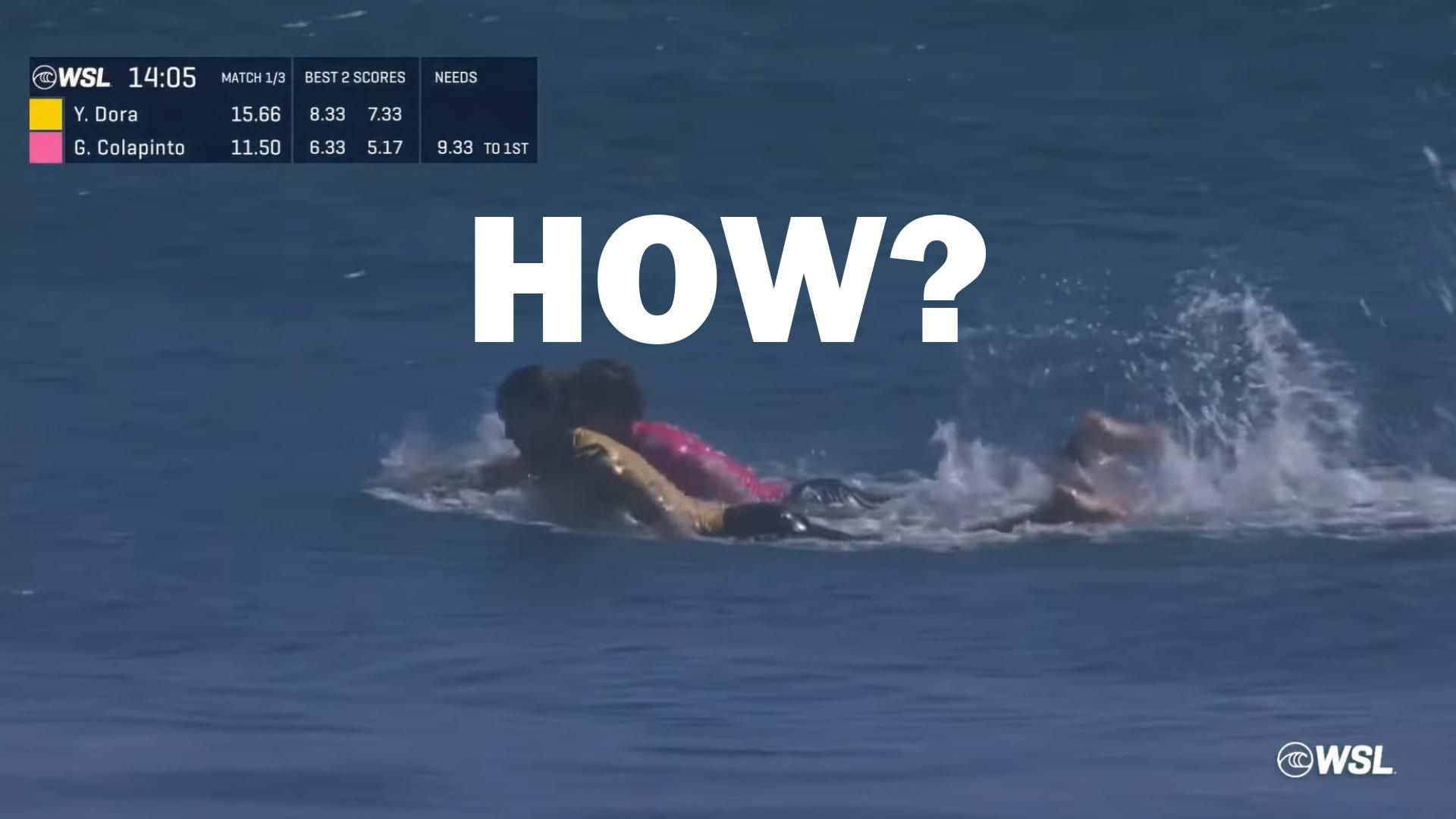
Yago Dora’s paddle battle victory over Griffin Colapinto at the Lexus WSL Finals in Cloudbreak wasn’t just about Griffin being fatigued - it was about strategy.
In this breakdown, I’ll show you how Yago used drag principles, drafting, and sprint timing to conserve energy and overtake Griffin at the perfect moment.
You’ll learn:
- What frontal drag is and how it affects paddling speed
- Why drafting saves massive energy in paddle battles
- How Yago timed his sprint acceleration to maximum effect
- The role of frontal and wave drag and why surfers can’t escape displacement mode
This isn’t just physics - it’s applied paddling strategy that even pros I coach use to gain an edge.
Want to dive deeper? Grab the Level 1 Paddling Technique Book to learn the techniques to apply these principles yourself.
Does Kicking Help You Catch Waves?
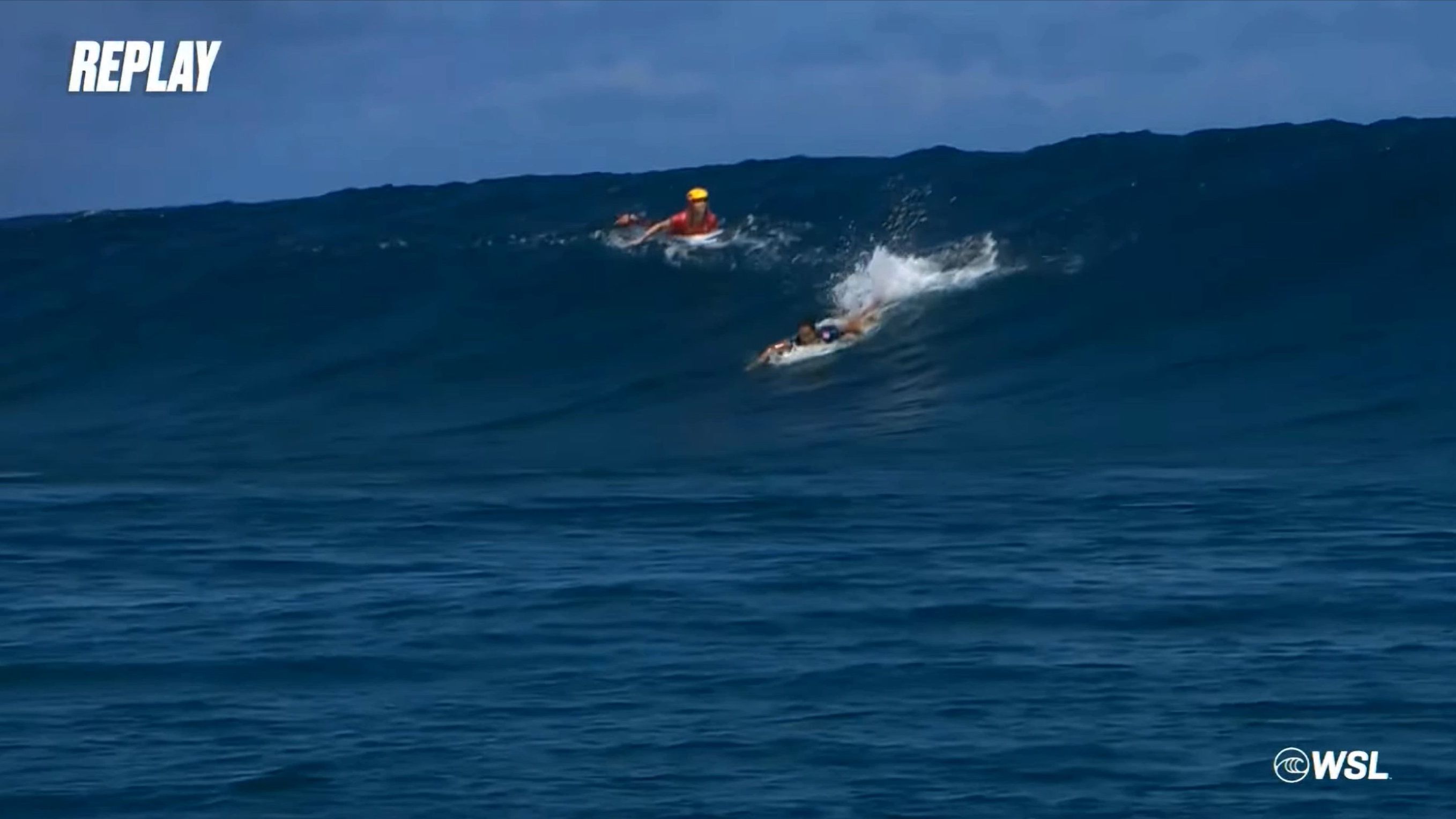
[Video below]
One of the most common questions I hear as a surf paddling coach is: Does kicking while paddling actually help you catch waves?
The short answer: we’re not 100% sure yet—but anecdotal evidence strongly suggests that it can help.
What the Science Says
In 2010, a study published in the Journal of Sports Science tested competitive junior surfers paddling in flatwater. The results showed that kicking increased peak paddling speed by about 8%, which translated to an extra 0.8–1.6 meters gained over a 5–10 second sprint. That’s a significant advantage when speed and positioning matter.
Real-World Surf Examples
We’ve also seen kicking in action during pro contests. In paddle battles, like Seth Moniz vs. Ethan Ewing or Kauli Vaast vs. Crosby Colapinto in the Lexus Tahiti Pro, surfers used kicking to gain extra speed. These moments highlight that kicking can make the difference in tight situations.
Wave Catching: Still Unproven
Here’s the catch: while kicking clearly helps...
How Did Jack Robinson Out Paddle Someone 4 Inches Taller Than Him?
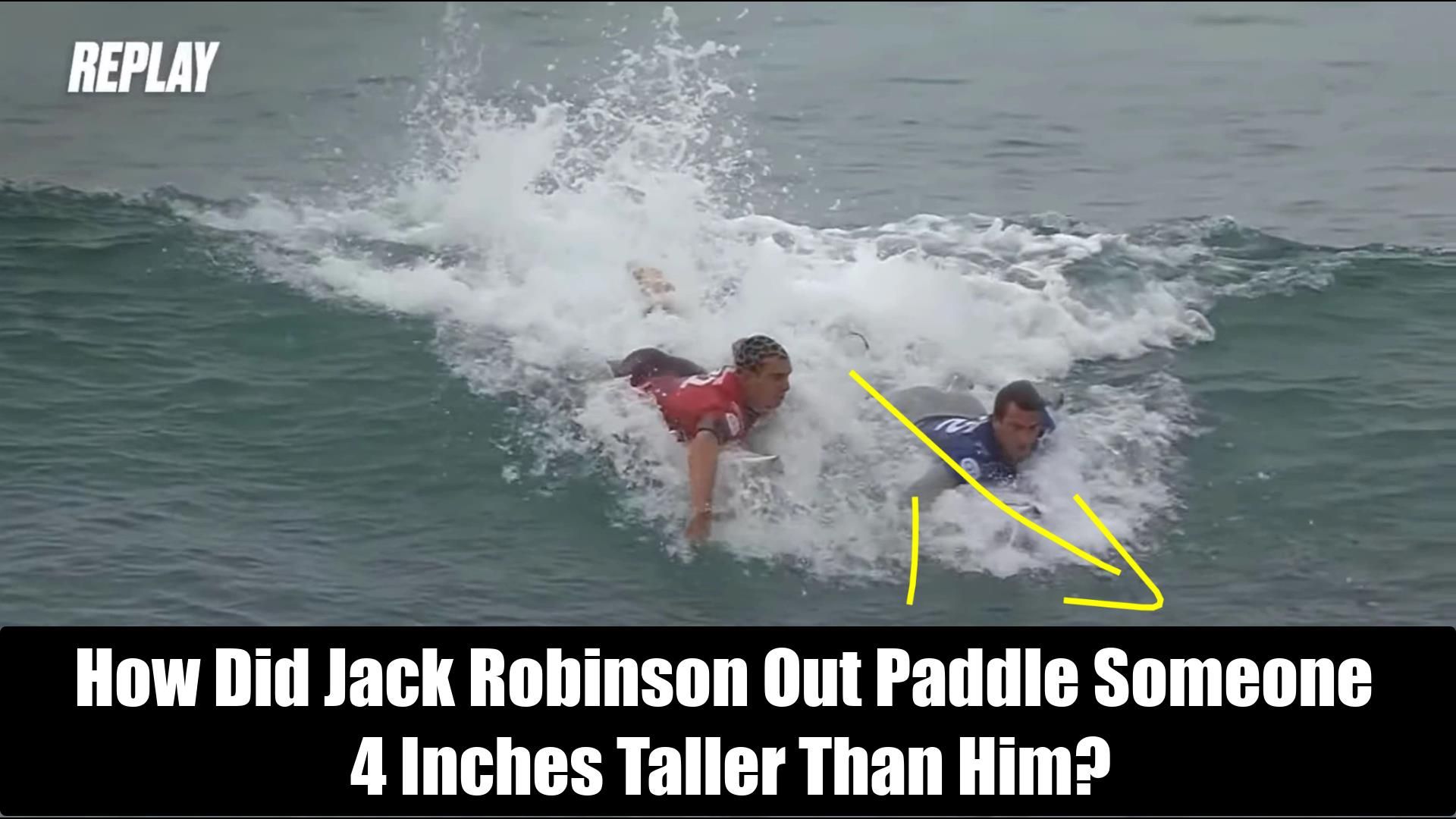
Here's a quick analysis of a wave catching sequence between Cole Houshmand and Jack Robinson at the Trestles Pro 2025 contest, quarterfinals.
How did Jack out paddle Cole, who is four inches taller than him?
One subtle technique did the trick. This video breaks it down.
Enjoy!
For more info on the book and to get the three free bonus videos before you purchase it, go here: https://www.surfingpaddling.com/surfing-paddling-technique-book
How to Maximize a Surf Trip - Top Three Paddling Focus Points

How to Maximize a Surf Trip - Top Three Paddling Focus Points to get the most waves during your week (and to last your whole week)
We just returned from a week in long right point break waves in El Salvador while co-coaching with Dan Mori from Encinitas. It was an amazing week of progression and fun, and a proper blog article about it will be coming next month.
But one of the first things we discussed was how to last throughout the whole week, and consequently, how to get the most waves during the week.
Yes, fitness plays a role. But I say it all the time, you could be the Incredible Hulk, but if you have forty parachutes tied to the back of your surfboard, don’t you think it’s smarter to cut a bunch of them to move more efficiently? And then also use that strength in the correct places in the stroke so you aren’t wasting energy? I digress. The point is, fitness is important, but there are other aspects that should be thought of first.
When coaching surfers in general I have one ma...
3 Techniques to Make Paddling into Steep Waves EASY - with Kolohe Andino

A common request once a surfer has completed Level 1 and is either in the middle of Level 2 or afterwards, is how to paddle into steep waves.
The same sequencing and techniques are used in steep waves as they are in not so steep waves, but these three techniques stand out the most when paddling into steep waves.
If you have any questions, please feel free to reach out.
Yeww!
Learn more about Paddling Technique in the Level 1 and Level 2 courses here.
The Most Underrated Paddling Technique to Gain Efficiency

A few years ago, a client and friend of mine, Zouhair Belkoura (of Pacifica Board Factory), were talking about how an experiment might be conducted to test board length in regards to efficiency and speed. Shortly thereafter, we devised a small experiment where he shaped three surfboards of the same volume but varied in length (6’, 7’, and 8’), attempting to keep the profiles as close as possible, only changing thickness and width to achieve an equal volume.

We began collecting data in early 2021 and wrapped up in Aug/Sept 2021.
The results are as you would expect, with the 8’ being the most efficient in regards to stroke rate, 7’ next best, and 6’ worst; and, in regards to average speed, the same trend emerged.


You can watch the podcast talking about this experiment here; and Zouhair’s write up here.
The Anomaly?
There is one statistic that I’d like to point out in this article and explain with a little more detail. And that is the data that emerged from my own paddlin...
Crosby Colapinto vs Seth Moniz Paddle Battle in Tahiti – Examples of Good Sprint Paddling Technique and Bad Sprint Paddling Technique

In this video, I’m going to show you the top three techniques both surfers used that were good, and the top three bad techniques they ended up using once they fatigued; and I’m going to add a few bonuses at the end on why Seth won priority.
To learn more about the Level 1 Paddling Technique course, please feel free to reach out.
A Case for the 3-Stroke Burst

The other day, I witnessed a surfer paddling as fast and as hard as he could to catch a wave that was still ten feet behind him. The wave inevitably caught up to him and he eventually caught it, got to his feet and rode away.
He paddled out for another wave, and at the next opportunity, he repeated his sequence of events, paddling as hard and fast as he could with the wave at least ten feet behind him. On this attempt, the wave moved underneath him, and he rolled down the back of the wave. So, he didn’t paddle back out as far.
On his third opportunity, he once again started to paddle as fast and as hard as he could with the wave ten or more feet behind him, but this time the wave crashed horribly on top of him and sent him rolling around in the washing machine.
He then headed in. Given the three wave attempts I observed, he had a 33% make rate. On top of that, he looked tired, and I’m sure would have said he needs to get more “paddle fit”.
But what if there was a more efficient and...
